
Between War and Opposition
A response to Mark Neely about partisanship in wartime

Having multiple different political parties is a good thing. Or, at least, given that we can’t fulfill the American Founding Fathers’ ideal and have no political parties, it’s a good thing we have more than one political party.
That is to say, it’s good for liberty.
But is it also good for the nation as a nation?
Or, to look at the nation when it’s in a crisis: did having two political parties help the United States during the Civil War? Or for that matter, did not having two political parties hurt the Confederacy?
That’s the question that historian Mark E. Neely asks at one point during his very interesting book The Union Divided. He answers both those questions “no”, but I think he answers it too quickly.
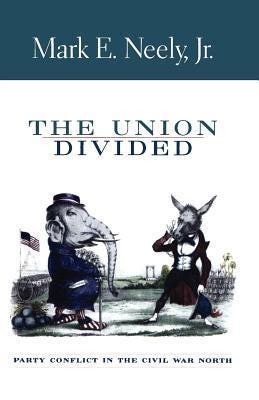
Neely actually wrote two books on party conflict in the United States during the Civil War (at different points in his career), and I recently read them both: The Union Divided (first published 2002), and Lincoln and the Democrats (first published 2017). They’re very interesting books; I enjoyed his the many stories and incidents he recounts about political conflict during the war.
Many people (especially Republicans) assumed political parties would dissolve during the war, but that didn’t happen - in part because the Republicans (unsurprisingly) started enacting their partisan platform, and in part because the Democrats were determined not to let themselves dissolve. So, despite people’s best efforts, the United States did get vigorous party conflict during the Civil War. Did that help things?
Neely concludes that preserving a healthy two-party system through a civil war was a significant achievement of the United States, and I agree. He says it was no thanks to the Republican Party, quoting many Republicans’ extensive rhetoric accusing the Democrats of treason, which he argues was completely sincere - and I agree it was sincere - but I think he here forgets the apocalyptic possibilities he raises elsewhere.
The Republicans didn’t make those possibilities real. If the pro-Democratic newspapers shut down for falling for a damaging hoax had not been so quickly allowed to reopen, if President Lincoln had investigated General McClellan for treason (as he had been accused of) while he was the Democratic nominee, if the Democratic-controlled Illinois state legislature had been shut down by military force as had been suggested - those would have been far more destructive to the two-party system. Refusing each of these possibilities when suggested helped preserve a two-party system. If this wasn’t due to every Republican (some were making these suggestions), it was due to the Republican political establishment and ultimately President Lincoln. They didn’t encourage a two-party system, but they kept it possible.
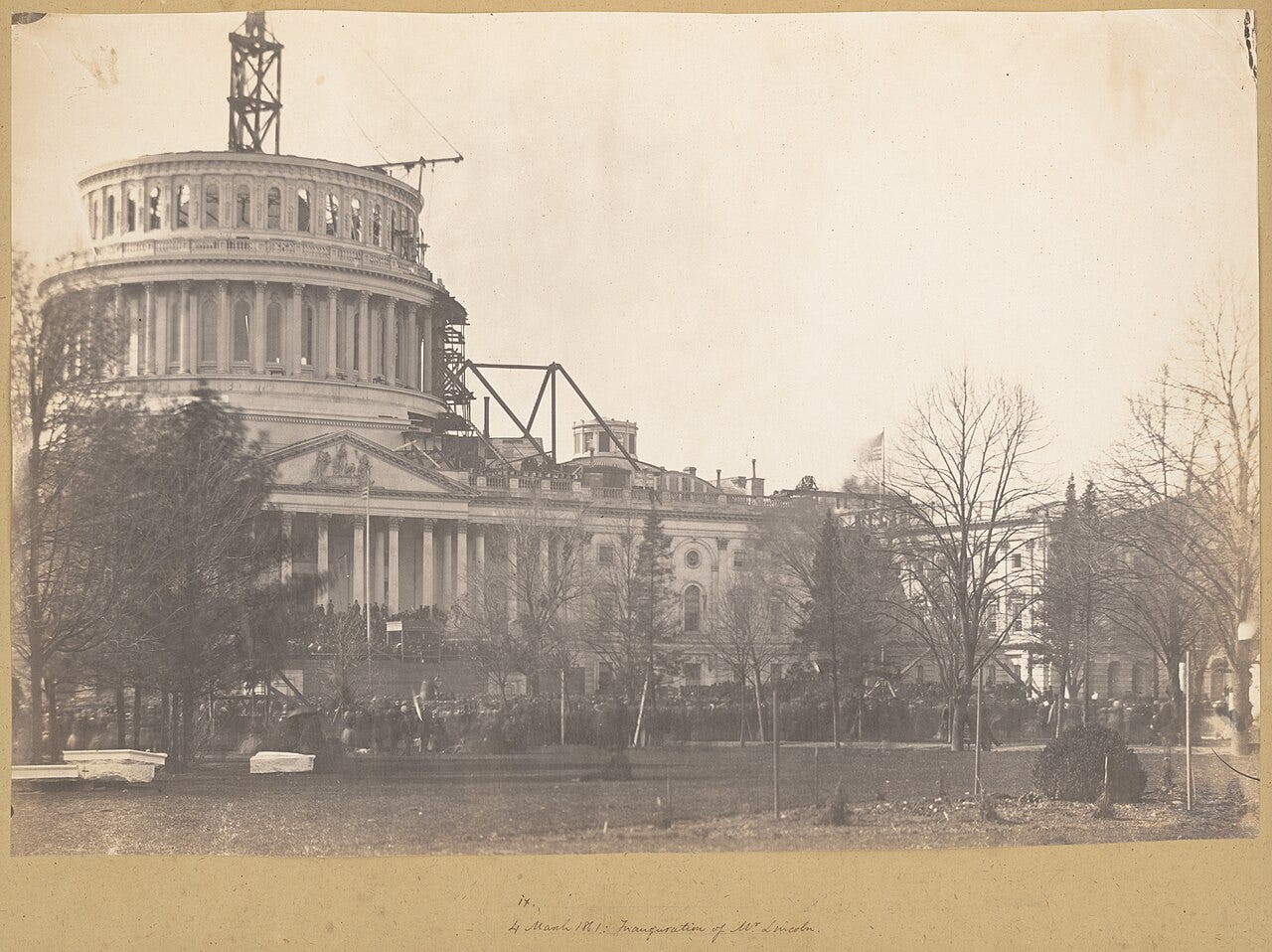
Or, simply, what if elections had been postponed? No one even suggested that. As Neely says elsewhere, just about every American agreed it went without saying that, even in the middle of a Civil War, the Constitution must be upheld (at least insofar as possible) and elections must be held on schedule.
This doesn’t require a two-party system (in fact, the Constitution does not mention political parties), but it provides the space inside which a two-party system has flourished almost throughout the history of the United States. Leaving that space open throughout the Civil War was a significant achievement of the Republican Party. American political parties have kept soaring over that bar ever since President Jefferson let the Sedition Act of 1798 expire, so we often take it for granted.
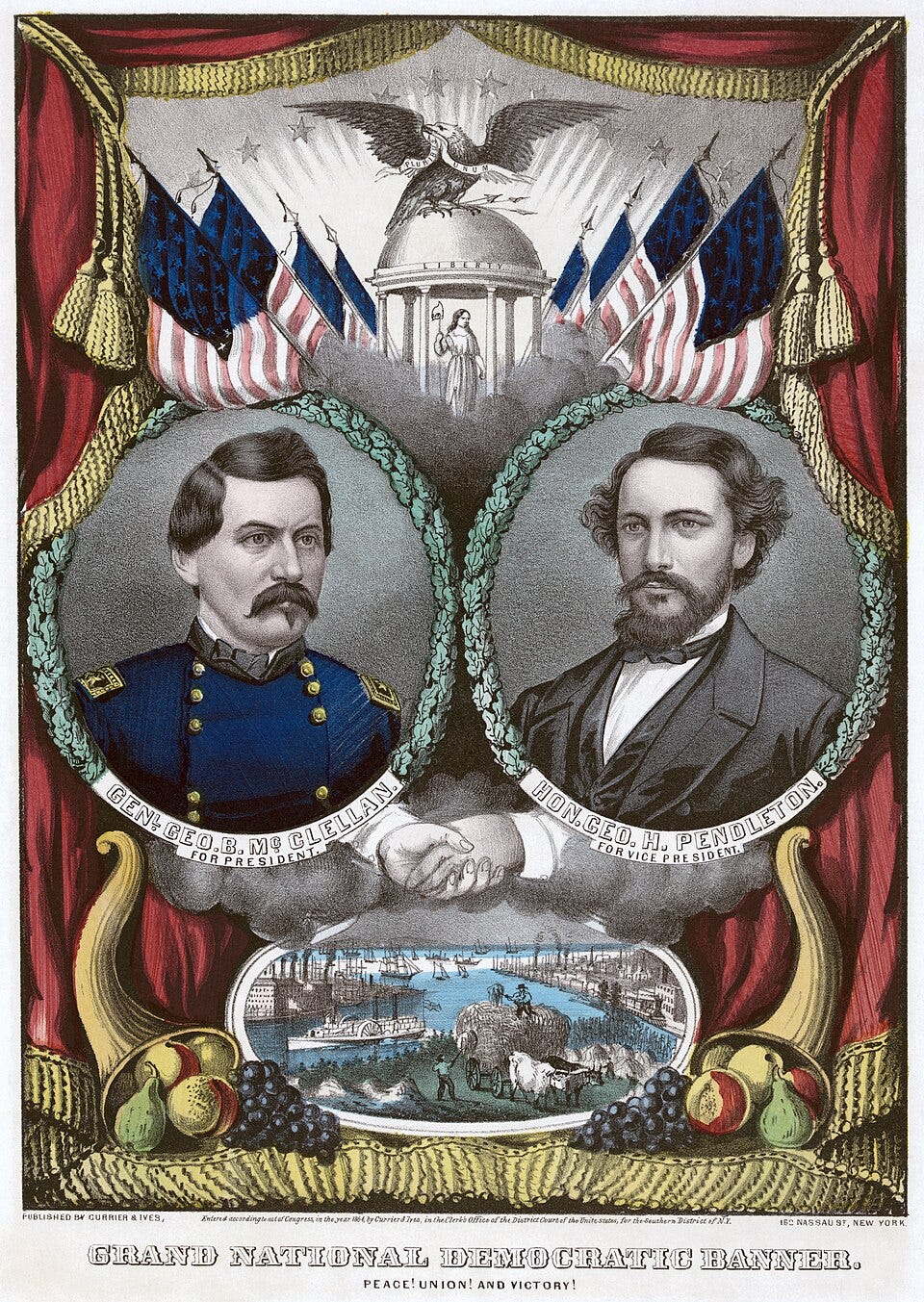
Neely also takes issue with previous historians (such as James McPherson in his excellent Battle Cry of Freedom which I highly recommend) who argued that a two-party system was a significant strength of the Union in the war, and that a lack of a two-party system hurt the Confederacy. A two-party system, McPherson argues, helped focus the opposition to Lincoln toward constructive ways, and the lack of it in the Confederacy kept the opposition to Davis disorganized.
Neely replies that there’s no evidence of Lincoln ever being helped by the Northern opposition’s focus, and therefore both McPherson’s theses are disproven.
I agree with Neely on the North, but I think he too hastily dismisses McPherson’s thesis about the Confederacy. Instead, I believe that - given Confederate President Davis’s actual poor performance as a Commander-in-Chief - having a healthy two-party system would have helped the Confederacy. It wasn’t helpful in the North given Lincoln’s good performance, but it would have been in the South.
As Neely shows, the United States Constitution (which the Confederate Constitution copied on these points) makes the President Commander-in-Chief of the army and gives Congress little direct say once war has been declared. Congress can vote on how much to fund the military, so they can in theory starve a war effort - but no party wanted to do that, after the Federalist Party’s opposition to the War of 1812 had caused them to disintegrate as a party.
So, Neely concludes, Lincoln and Davis were both effectively unchecked with regards to the war effort - and would have been even if Davis had had an opposition party.
However, Neely is too fast to dismiss the checks that could remain had anyone chosen to use them.
In both the Union and Confederacy, a President interacted with Congress many times about legislative and administrative matters. Congress was far more involved than they are today. Today, broad legislation delegates many matters to the President; then, Congress had to deal with them directly. If Congress wanted to make the President’s life difficult, they certainly could.
What’s more, Congress has wide powers of investigation and subpoenas.
Neely completely ignores the Joint Commission on the Conduct of the War, where (the US) Congress repeatedly interrogated generals and other witnesses to repeatedly investigate their performance. Of course, it was Republican-controlled, but it frequently played roles in disputes inside the Republican Party - and if the Democrats had ever controlled Congress, they could have easily used it for more partisan ends. Perhaps this couldn’t have hurt Lincoln directly, but it could easily have embarrassed him and hurt him in a future election.
There’re also a few other direct weapons Neely ignores. Generals’ commissions are confirmed by Congress, and military funding could be earmarked for specific weapons should they wish. Unlike the Federalists during the War of 1812, an opposition party wielding these weapons would be vigorously favoring the war.
And then, as an ultimate sanction, they could impeach the President. Of course, the Democrats would be unhappy with Vice-President Hamlin replacing Lincoln, and a pro-war Confederate opposition would be unhappy with Vice-President Stephens replacing Davis. But, a President Hamlin or Stephens would be weaker - and as another last resort, Congress could impeach them too.
So, an opposition party controlling Congress could in theory have exercised more power in the war.
In practice, this wouldn’t have helped the Union. Lincoln didn’t run the war perfectly; he was learning on the job and sometimes diverted forces for political reasons. But, the War Democrats in Congress would have been learning on the job too - and I suspect they would’ve taken a lot longer to learn than Lincoln historically did, and would’ve played politics with the army much more. And, by the end, Lincoln was doing a very good job at running the war.
So, a more powerful and organized opposition party would not have helped the Union.
However, it would have helped the Confederacy, because Davis did a worse job running the war. Granted, Davis was in a much worse position than Lincoln, with fewer resources and a harder job to keep his nation together. But still, he did it worse. He frequently promoted generals based on personality, micromanaged the army much more than Lincoln did (to the point where there was no General-in-Chief till 1865), wasted resources on projects like numerous ironclad ships that were never launched, and had very little coordinated strategy beyond playing for time.
If an opposition party had developed and pressed for more focused management of the military, it could have improved Confederate fortunes. If an opposition party had somehow gotten a better general-in-chief in office, it easily could have.
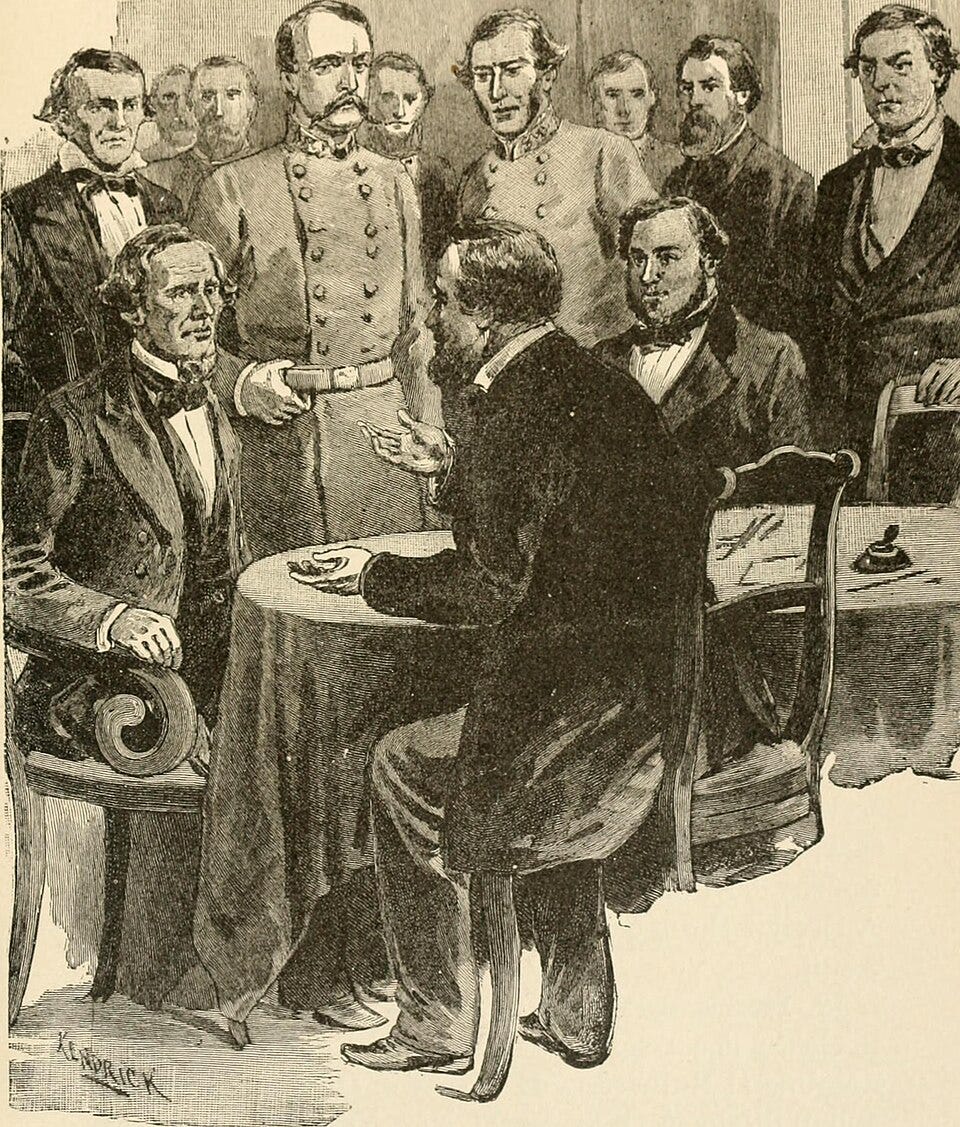
Would an opposition party have focused on this? Maybe. It’s hard to tell because no opposition party ever did form. The vague groping toward an opposition party late in the war was focused around states’ rights against Davis’s (very real) autocratic centralizing tendencies.
Some other historians (such as Herman Hattaway) argue that this states' rights opposition substituted for a two-party system. However, being mainly at the state level and without any larger organization to coordinate it, it never had a hope of providing a plausible policy for the Confederate government. In the Union, McClellan and congressional Democrats were working on the federal level and saying what they would be doing in Lincoln's place. In the Confederacy, Vance and Brown were only state governors and didn't even offer any suggestions what Davis should do.
If they’d gotten in power, they could have dissipated and hurt the Confederate military effort... but perhaps instead they would have installed a better General-in-Chief? Or perhaps earlier in the war an opposition party would have formed differently?
Fortunately for the cause of liberty, Davis’s worst tendencies continued without any coordinated opposition party to check him.
I’m glad I’ve read these two books by Neely; politics during the Civil War is a fascinating subject. He digs up many interesting stories. I’m definitely planning to read more by him.
However, when he compares reality to possible alternatives here, I’m afraid he seems to suffer from a lack of imagination. History could have gone far differently - much more differently than Neely seems to think.
I'm not sure if Neely discusses this, but I can think of a few ways in which the presence of a robust Democratic party probably helped the North:
1. The presence of a loyal opposition party probably helped keep Northern antiwar sentiment from turning violent; it's worth noting that outside of the border states, there were no antigovernment guerrilla movements, something the Confederacy had to deal with semi-regularly.
2. Whenever Republicans considered enacting repressive measures that would have boded ill for the long-term health of the republic, they had to then think about the fact that people alienated by said measures had another party they could go to.
3. Relatedly, it also helped give Lincoln and others within the administration a pretty good idea of where Northern public opinion sat, which meant that Lincoln was better able to gauge his messaging so as to keep as many people on-side as possible.